Lawn care
Best Lawn Fertilizer for Weeds in 2026: A Homeowner’s Honest Guide

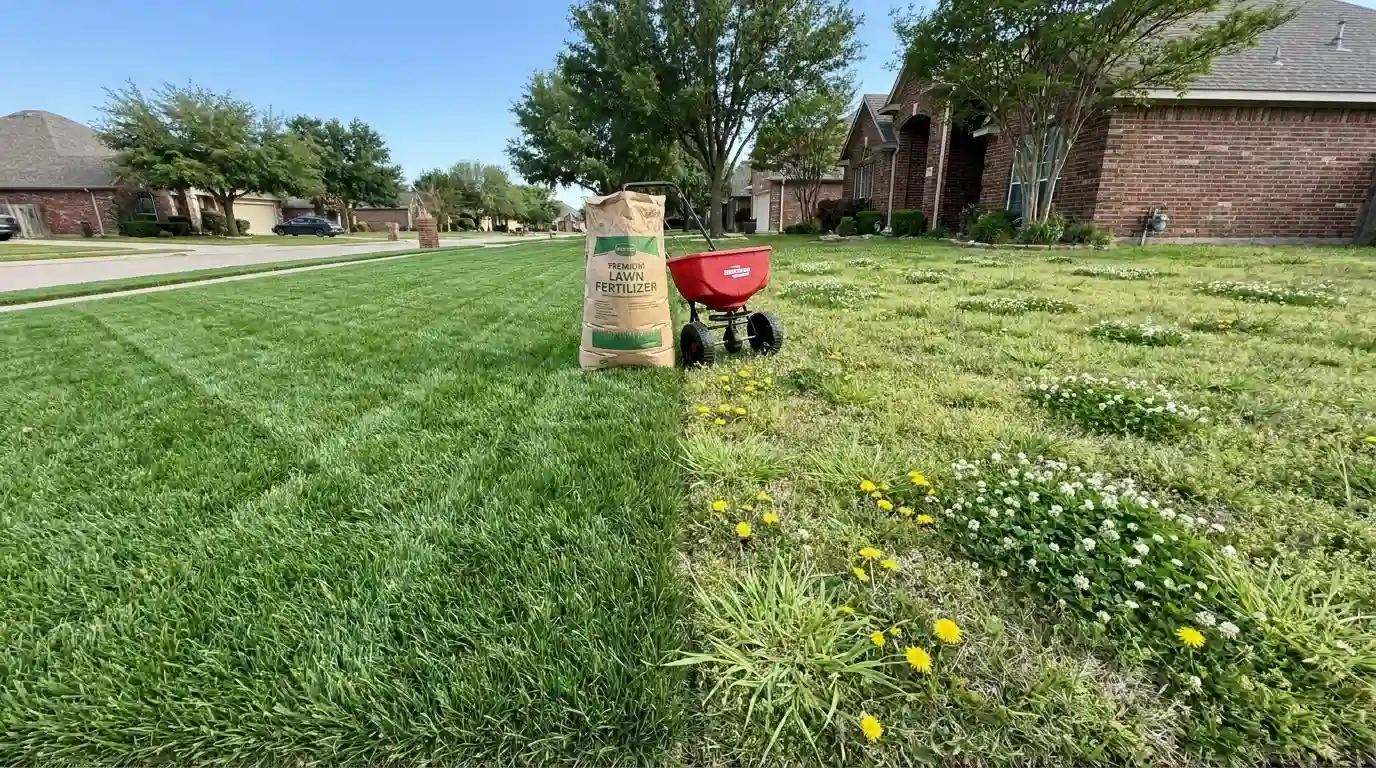
Three summers ago, my front lawn looked less like grass and more like a science experiment gone wrong — dandelions everywhere, patches of crabgrass creeping across the walkway, and clover taking over an entire corner near the mailbox. I tried pulling weeds by hand for two weekends straight before I finally admitted defeat and started researching weed-and-feed products seriously. That rabbit hole turned into years of testing different lawn fertilizers, comparing results season after season, and learning the hard way which products actually work versus which ones just make big promises on the bag.
So here’s my honest, tested breakdown of the best lawn fertilizers for weeds, how they actually work, and how to pick the right one for your grass type, your climate, and the specific weeds you’re dealing with. This isn’t a copy-paste list pulled from a dozen other lawn care blogs — it’s what’s actually worked in my own yard here in Texas, plus what I’ve learned talking to other gardeners dealing with different climates across the country.
Why Regular Fertilizer Alone Won’t Fix a Weedy Lawn
A lot of homeowners assume that if they just feed their grass enough, it’ll naturally choke out weeds on its own. There’s some truth to that — a thick, healthy lawn does compete better against weeds for sunlight and nutrients.
But if you already have an active weed problem, straight fertilizer without a weed control component just feeds the weeds right alongside your grass. That’s exactly what happened in my yard the first year. I fertilized heavily, and my dandelions grew just as fast as my grass did.
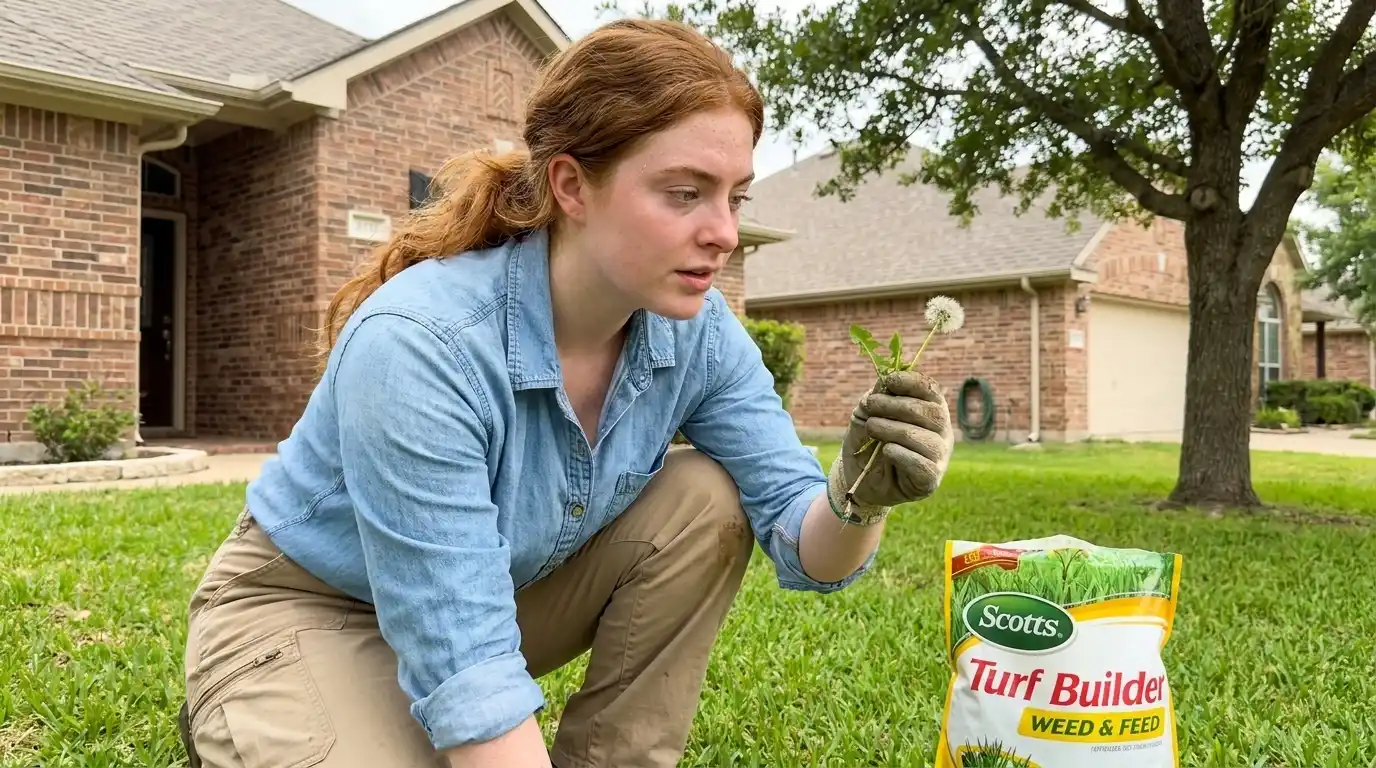
This is where combination products, commonly called “weed and feed,” come in. These products pair a fertilizer blend with either a pre-emergent herbicide that stops weed seeds from germinating, or a post-emergent herbicide that kills existing weeds while your grass keeps growing. Picking the right type for your situation makes a bigger difference than picking the “best” brand on the shelf.
Pre-Emergent vs. Post-Emergent: Know Which One You Actually Need
This distinction trips up more homeowners than anything else in lawn care, and it’s the single most important thing to understand before buying any product.
- Pre-emergent fertilizers — applied before weed seeds germinate, typically early spring or early fall depending on your weed type; they don’t kill existing weeds, only prevent new ones from sprouting
- Post-emergent fertilizers — applied after weeds are already visible and growing; these target existing weeds directly while feeding the surrounding grass
- Timing matters more than product choice — even the best pre-emergent won’t help if applied after weeds have already sprouted
- Some products combine both — useful for lawns with a mix of new and existing weed growth, though usually less potent at either function individually
If your lawn already has visible dandelions, clover, or crabgrass right now, you need a post-emergent product. If you’re trying to prevent next season’s crabgrass before it even starts, you want a pre-emergent applied in early spring when soil temperatures start warming.
Top Lawn Fertilizer for Weeds Control Compared
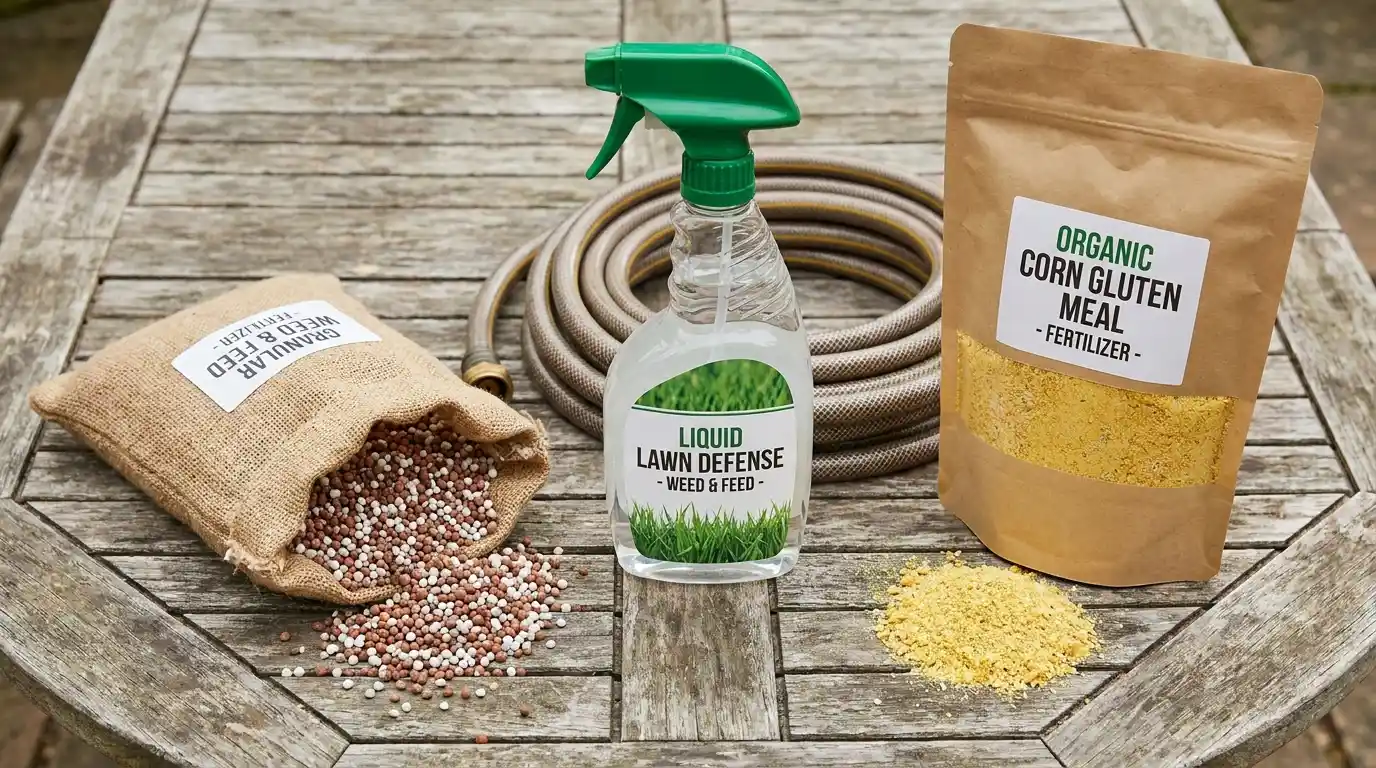
Here’s a breakdown of the main categories you’ll come across while shopping, along with what each one is genuinely best suited for.
| Fertilizer Type | Best For | Application Timing | Results Visible In | Price Range |
|---|---|---|---|---|
| Granular weed and feed | General broadleaf weeds, easy application | Early spring or fall | 1–3 weeks | $25–$60 |
| Liquid weed and feed | Faster absorption, spot treatment | Active growing season | 3–10 days | $20–$50 |
| Pre-emergent granular | Preventing crabgrass, annual weeds | Early spring, before soil hits 55°F | Season-long prevention | $30–$70 |
| Organic weed and feed | Pet-safe yards, eco-conscious homeowners | Growing season, any time | 2–6 weeks | $35–$80 |
| Slow-release synthetic blend | Long-term feeding plus weed suppression | Spring or fall, every 6-8 weeks | 2–4 weeks | $30–$65 |
1. Granular Weed and Feed
This is the most common option you’ll find at any hardware store, and for good reason. It’s easy to apply with a standard broadcast spreader, spreads evenly, and combines nitrogen-rich fertilizer with a broadleaf herbicide that targets common lawn weeds like dandelions, clover, and plantain without harming most turf grass varieties. The main thing to get right is watering it in properly right after application, since the granules need moisture to activate and reach the weed’s root system.
I use a granular product on my main lawn every spring, right as the grass starts actively growing again after winter dormancy. The mistake I made the first year was applying it during a dry spell and not watering it in for almost a week — the weeds barely reacted, and I ended up needing a second application just a few weeks later.
2. Liquid Weed and Feed
Liquid formulas absorb into weed leaves faster than granular products, which makes them a good choice if you’re dealing with an active, visible weed problem and want quicker results. They’re also easier to spot-treat specific problem areas without covering your entire lawn in fertilizer you might not need everywhere.
The tradeoff is that liquid applications typically require a hose-end sprayer or backpack sprayer, and they’re more sensitive to weather — rain within a few hours of application can wash away the product before it’s absorbed. If your area gets unpredictable spring showers, granular might be the more forgiving option.
3. Pre-Emergent Granular Fertilizers
These are specifically designed to stop weed seeds, especially crabgrass, from germinating in the first place. Timing is everything here — you generally want to apply pre-emergent when soil temperatures are consistently around 50 to 55 degrees Fahrenheit, which is usually a few weeks before your local crabgrass germination window begins. Miss that window, and the product won’t do much good since the weeds have already sprouted.
Most gardeners in warmer climates like mine apply pre-emergent in late February or early March, while cooler northern climates might wait until April. Checking your local extension office’s soil temperature data is honestly the most reliable way to nail this timing instead of guessing based on the calendar date alone.
4. Organic Weed and Feed
For households with pets, young kids, or edible gardens nearby, organic weed and feed products have become a popular middle ground. These typically use corn gluten meal as a natural pre-emergent agent, which also happens to add nitrogen to the soil as it breaks down. They tend to work more slowly and less aggressively than synthetic herbicides, so they’re better suited for lawns with mild to moderate weed pressure rather than a full-blown infestation.
5. Slow-Release Synthetic Blends
These are built for homeowners who want consistent, long-term feeding without having to reapply every few weeks. The slow-release coating means nutrients and weed control agents are released gradually over six to eight weeks, which reduces the risk of burning your lawn from too much nitrogen at once and keeps weed suppression more consistent over time.
A Lesson Straight From the Gardening Classics
Louise Riotte’s classic book Roses Love Garlic makes a point that’s stuck with me long after I first read it — she emphasizes that a strong, well-balanced lawn or garden ecosystem naturally resists weed pressure far better than one that’s constantly fed nitrogen without attention to overall soil health. While her focus was more on companion planting principles, the underlying idea applies directly to lawn care: a fertilizer program that only chases weeds without building healthier turf underneath is fighting a losing battle season after season.
That’s exactly why I stopped chasing quick-fix weed sprays years ago and switched to a seasonal fertilizing schedule that builds thicker turf over time. My weed problems didn’t disappear overnight, but each year they’ve gotten noticeably smaller, simply because the grass itself is strong enough now to out-compete new weed growth before it gets established.
How to Choose the Right Fertilizer for Lawn weeds
- Active dandelions, clover, or broadleaf weeds visible now → post-emergent granular or liquid weed and feed
- Trying to prevent crabgrass before it sprouts → pre-emergent granular, applied in early spring
- Pets or kids using the lawn regularly → organic weed and feed with corn gluten meal
- Want fewer applications throughout the season → slow-release synthetic blend
- Dealing with a severe, established weed infestation → liquid spot treatment combined with a granular feeding schedule
Common Mistakes Homeowners Make With Weed and Feed Products
- Applying pre-emergent after weeds have already sprouted, which wastes the product entirely
- Not watering in granular products properly, reducing effectiveness significantly
- Mowing too soon before or after application, which can remove product before it’s absorbed
- Using post-emergent herbicide on a newly seeded lawn, which can damage young grass
- Applying during extreme heat, which increases the risk of burning both weeds and grass
- Ignoring soil temperature data and relying only on the calendar date for timing
- Overapplying in hopes of faster results, which often leads to lawn burn instead
Seasonal Application Timeline for Best Results
Getting the timing right makes a bigger difference than almost any other factor in lawn weed control. In early spring, focus on pre-emergent application before soil temperatures climb past that 55-degree mark, which stops crabgrass and other annual weeds before they even start. Once your lawn is actively growing through late spring and summer, switch to a post-emergent product if broadleaf weeds like dandelions or clover start showing up.
Fall is an often-overlooked window that’s actually one of the most effective times to tackle perennial weeds, since many broadleaf weeds are pulling nutrients down into their root systems to prepare for winter, which means herbicide gets carried down into the roots more effectively too. A fall application, paired with a light spring touch-up, has cut my season-long weed pressure down more than any single spring treatment ever did on its own.
Understanding NPK Ratios and Why They Matter for Weed Control
Every fertilizer bag has three numbers printed on the front, something like 20-5-10 or 24-0-10. These represent the percentage of nitrogen, phosphorus, and potassium in the blend, commonly known as the NPK ratio. For lawns dealing with weed pressure, nitrogen is usually the most important number to pay attention to, since it drives the thick, green growth that helps grass compete against weeds for space and sunlight.
That said, more nitrogen isn’t automatically better. A high-nitrogen product applied too frequently can actually stress your lawn and make it more vulnerable to disease and pest pressure, which ironically opens up bare patches for weeds to move right back into. I learned this after overapplying a high-nitrogen blend one summer, thinking more feeding would speed up my results. Instead, I ended up with patchy fungal spots that took most of the following season to fully recover from. A moderate, consistent nitrogen schedule almost always outperforms an aggressive one-time heavy application.
Phosphorus, the middle number, supports root development, which matters most for newly seeded lawns or ones recovering from serious weed damage. Potassium, the third number, helps with overall stress tolerance, including drought and temperature swings. For most established lawns fighting weeds, a balanced ratio with moderate nitrogen and lower phosphorus works well, since most established soil already has adequate phosphorus levels unless a soil test says otherwise.
Should You Get a Soil Test Before Choosing a Fertilizer?
Honestly, yes, and it’s a step most homeowners skip entirely. A basic soil test through your local extension office costs very little and tells you exactly what your lawn is missing, along with your soil’s pH level. Weeds like clover, for example, often thrive in lawns with low nitrogen and slightly acidic soil, which means you could be fighting clover for years without realizing the real fix is correcting your soil pH rather than just buying a stronger weed killer.
I sent off a soil sample two years into my own weed battle and found out my soil pH was noticeably more acidic than ideal for the fescue blend I was growing. Adding lime to raise the pH, alongside my regular fertilizing schedule, made a bigger difference in a single season than any product switch had in the two years before that.
Weather Conditions That Affect Fertilizer Performance
Temperature and moisture play a much bigger role in how well weed and feed products work than most product labels let on. Applying herbicide-based fertilizer during extreme heat, generally above 85 to 90 degrees Fahrenheit, increases the risk of stressing or even burning your grass while the weeds barely notice the difference. Cooler, mild days in the 60 to 75 degree range tend to give the best results for both weed absorption and grass safety.
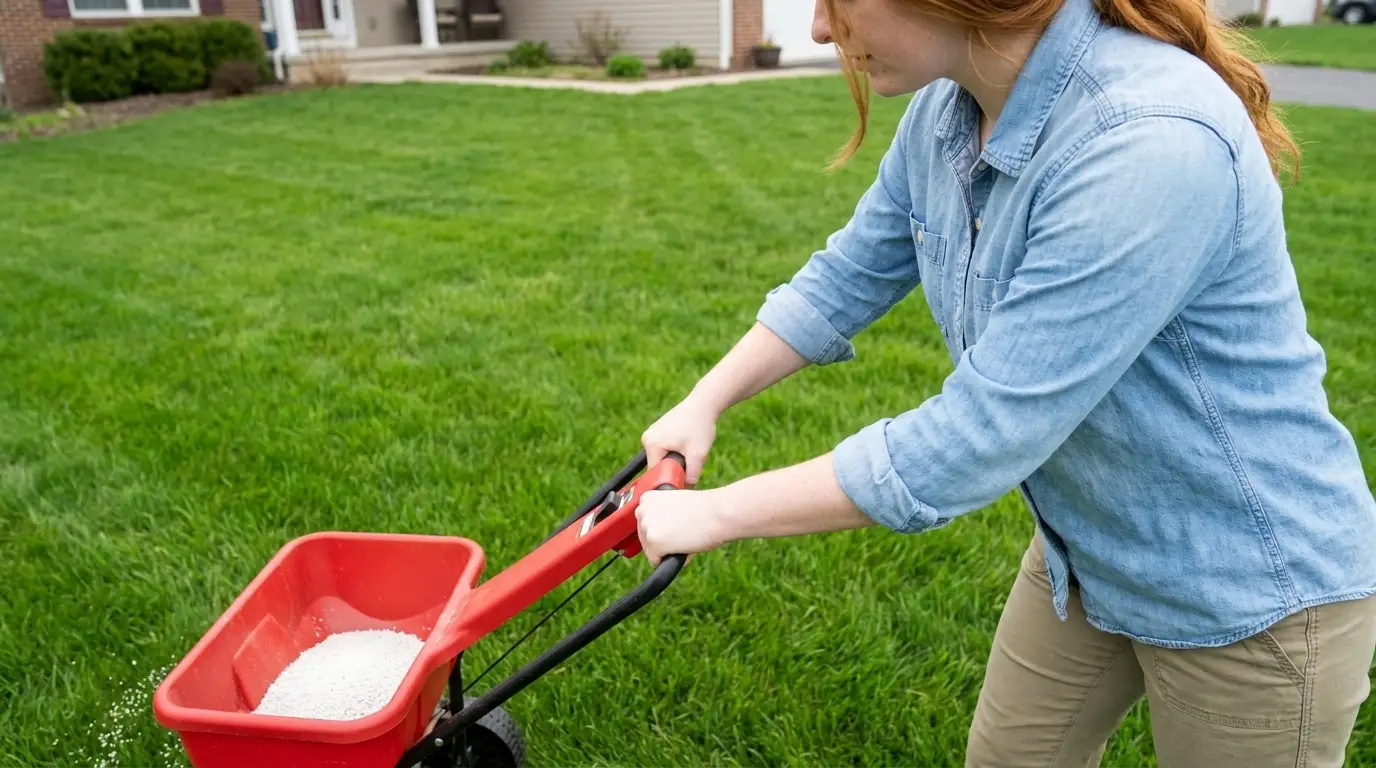
Rainfall timing matters just as much. Most granular products need to be watered in within 24 to 48 hours to activate properly, but heavy rain immediately after a liquid application can wash the product away before it’s absorbed into weed leaves. Checking a short-term forecast before applying anything has saved me more wasted product and wasted weekends than I can count.
Final Thoughts
Choosing the best lawn fertilizer for weeds really comes down to understanding what stage your weed problem is at and matching the product to that specific need, rather than grabbing whatever bag promises the fastest results. Pre-emergent products stop tomorrow’s weeds, post-emergent products handle today’s, and a consistent feeding schedule builds the kind of thick, healthy turf that naturally keeps weed pressure down season after season.
If you’re dealing with your first serious weed problem, don’t panic and don’t overapply trying to fix it in one weekend. Start with the right product for your specific weeds, apply it at the right time, and be patient. My own lawn didn’t turn around overnight, but three years into a proper seasonal routine, it finally looks the way I always wanted it to.
Jenna Whitfield is a home gardener based in Austin, Texas, writing about practical, tested gardening and lawn care solutions for backyard growers across the U.S.


 Gardening Tools3 months ago
Best Raised Garden Bed Kits in 2026: A Real Gardener’s Buying Guide
- Hydroponics3 months ago
Best Hydroponic Nutrients for Vegetables in 2026: A Grower’s Honest Guide
- Gardening Tools3 months ago
Best Greenhouse Kits for Beginners in 2026: A Real Gardener’s Guide
- Gardening Tools3 months ago
Best Garden Tractors in 2026: A Real Homeowner’s Buying Guide