Hydroponics
Best Hydroponic Nutrients for Vegetables in 2026: A Grower’s Honest Guide

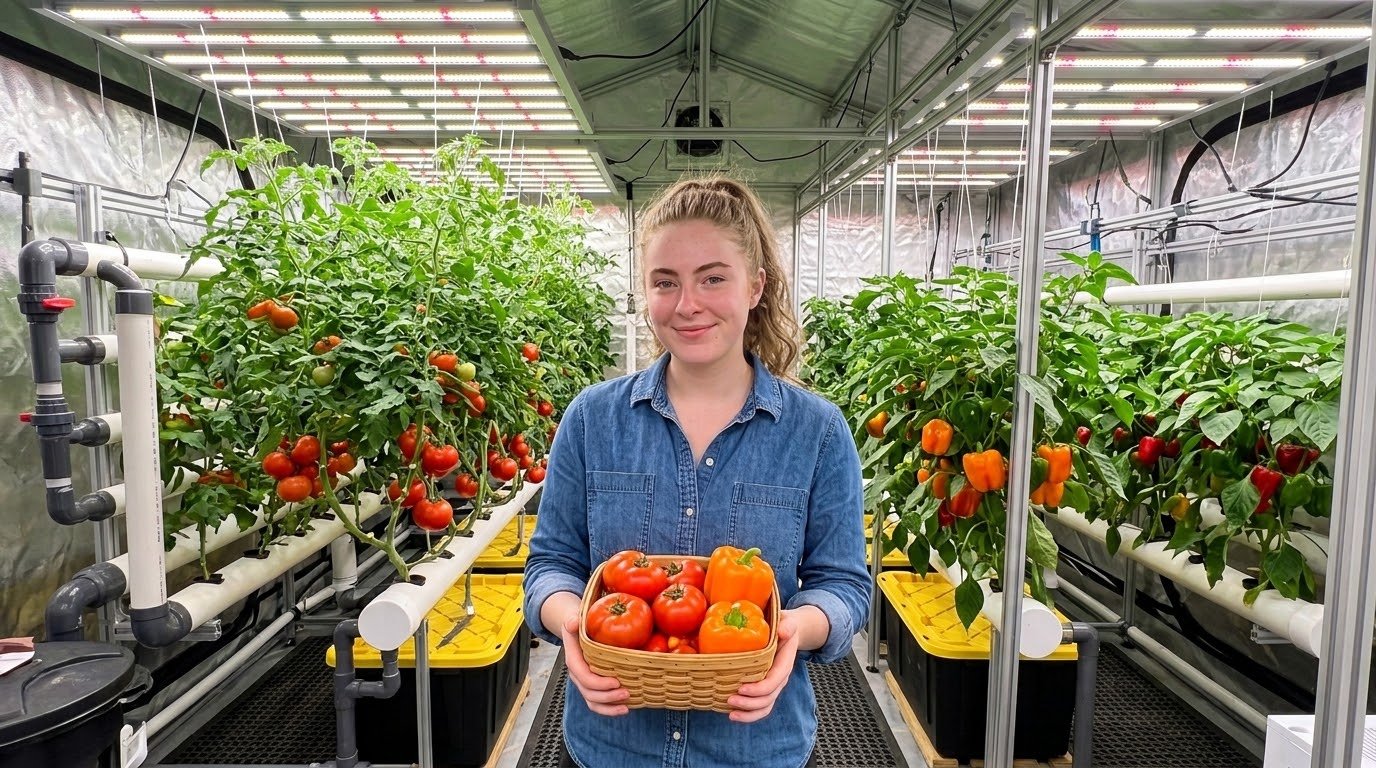
My first attempt at hydroponic tomatoes was, honestly, a disaster. I set up a simple deep water culture bucket system in my garage, got the lighting right, kept the pH somewhat in check, and still watched my plants turn yellow and stunted within three weeks.
It took me embarrassingly long to realize the problem wasn’t my setup at all — it was the cheap, generic nutrient solution I’d grabbed without doing much research. Once I switched to a properly balanced hydroponic nutrient line designed for vegetables, the difference within days was almost unbelievable.
Since then, I’ve tested more nutrient brands and formulas than I ever expected to, both in my garage hydroponic setup and in a small greenhouse tent I added last year.
So here’s my honest, hands-on breakdown of the best hydroponic nutrients for vegetables, how nutrient needs actually change throughout a plant’s growth cycle, and how to avoid the mistakes that cost me an entire season of tomatoes.
Why Hydroponic Vegetables Need a Completely Different Nutrient Approach
Soil naturally buffers a lot of nutrient imbalances. Microorganisms break down organic matter slowly, minerals get released gradually, and even if you overfeed a soil-grown plant slightly, the soil itself tends to absorb some of that excess.
Hydroponics removes that buffer entirely. Whatever nutrient solution you mix goes directly to the plant’s root system with nothing standing in between, which means precision matters enormously more than it does in traditional gardening.
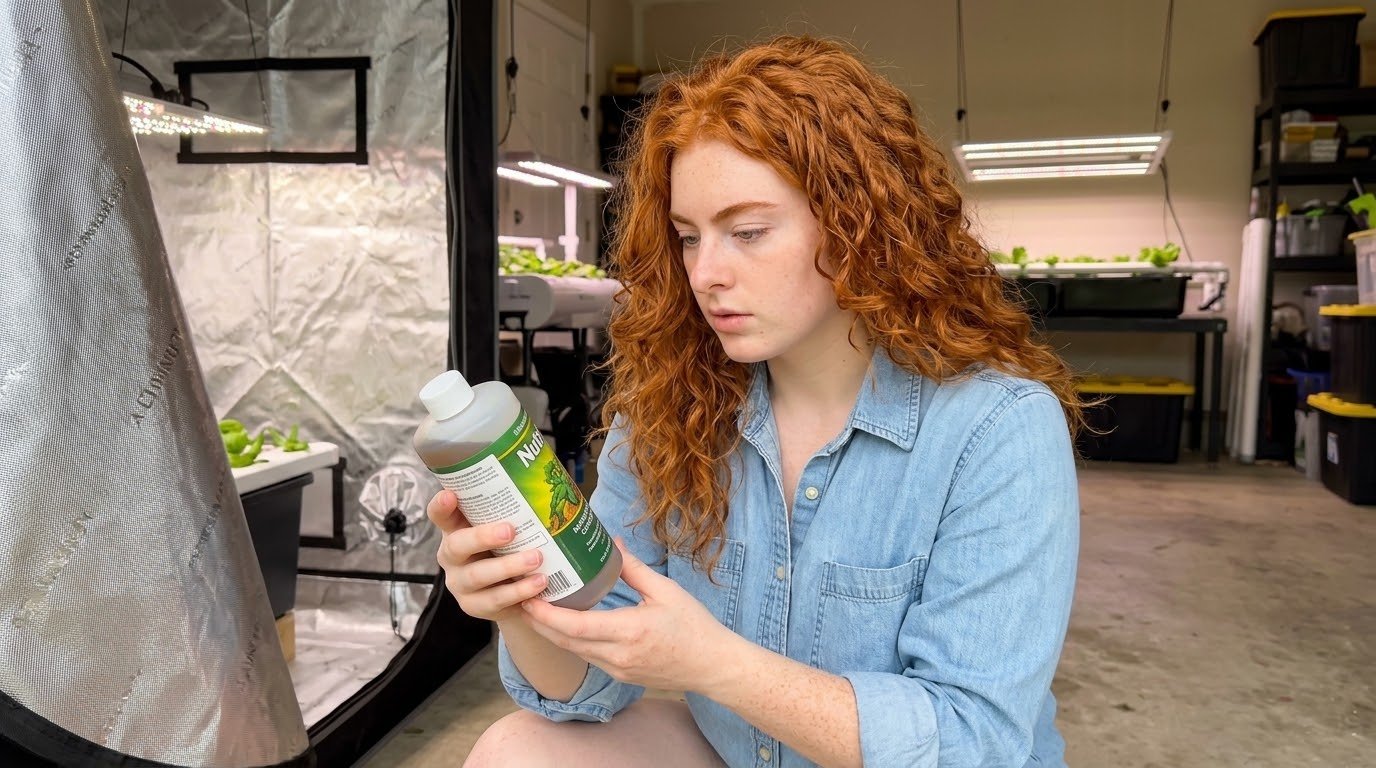
This is exactly why generic, one-size-fits-all liquid fertilizers made for potted houseplants tend to fail so badly in hydroponic vegetable setups. Vegetables like tomatoes, peppers, and cucumbers have much higher nutrient demands during fruiting stages than a ficus or pothos ever will, and hydroponic systems need a nutrient line formulated specifically to meet those demands at the right ratios, at the right time.
Understanding the Three Growth Stages and Their Nutrient Needs
One of the biggest lessons I learned the hard way is that vegetables don’t need the same nutrient mix throughout their entire life cycle. Hydroponic nutrient lines are generally built around three key growth stages, each requiring a different balance of macronutrients.
- Seedling/vegetative stage — higher nitrogen levels support leafy green growth and strong root development
- Transition/pre-flowering stage — a more balanced nitrogen-phosphorus-potassium ratio helps plants shift from vegetative growth to flower production
- Fruiting/flowering stage — higher phosphorus and potassium support flower set, fruit development, and overall yield
Using a vegetative-stage formula all the way through fruiting is one of the most common mistakes I see other growers make, myself included in that first failed tomato attempt. The plants stay green and leafy but produce disappointing, small fruit because they never got the phosphorus and potassium boost needed to properly set and develop tomatoes.
Best Hydroponic Nutrients for Vegetables Compared
Here’s a breakdown of the main nutrient formula categories you’ll come across while shopping, along with what each is genuinely best suited for.
| Nutrient Type | Best For | Mixing Complexity | Shelf Life | Price Range |
|---|---|---|---|---|
| 3-part liquid systems | Experienced growers wanting full control | Moderate to advanced | 1–2 years | $30–$80 |
| All-in-one liquid formula | Beginners, simple systems | Very simple | 1–2 years | $20–$50 |
| Powdered/dry nutrient mix | Long-term storage, bulk growers | Moderate | 3–5 years | $25–$70 |
| Organic hydroponic nutrients | Chemical-sensitive households, organic goals | Simple to moderate | 6–12 months | $25–$65 |
| Stage-specific formula kits | Fruiting vegetables like tomatoes, peppers | Moderate | 1–2 years | $35–$90 |
1. Three-Part Liquid Nutrient Systems
These typically come as separate “Grow,” “Bloom,” and “Micro” bottles, giving experienced growers the ability to fine-tune ratios based on exactly what stage their vegetables are in and how they’re responding. This level of control is genuinely valuable once you understand what you’re doing, but it does require more attention to mixing order and ratios than beginners usually want to deal with.
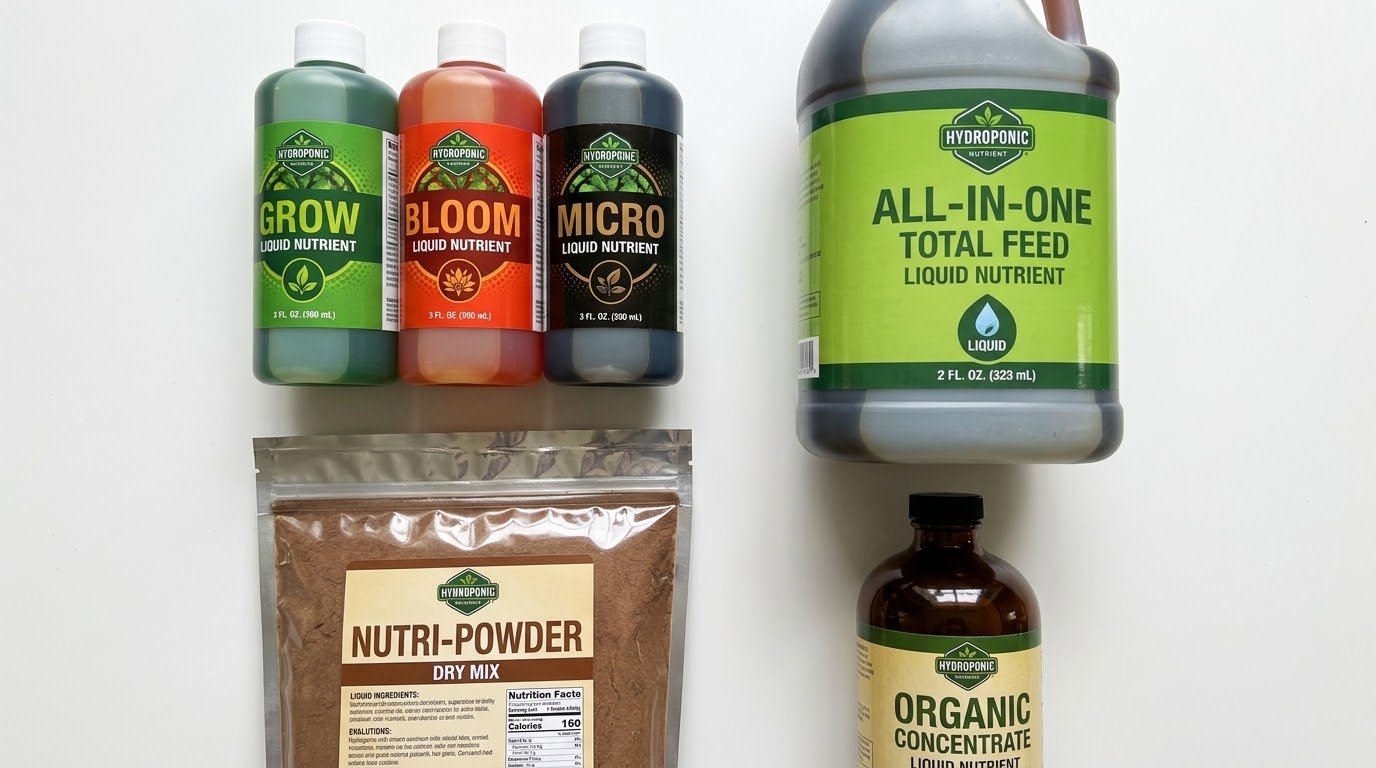
I switched to a three-part system for my greenhouse tomatoes last year, and the ability to slightly increase potassium during peak fruiting made a noticeable difference in fruit size and overall yield compared to my earlier all-in-one formula days.
2. All-in-One Liquid Formulas
For beginners, or honestly for anyone who just wants reliable results without a steep learning curve, all-in-one formulas remove a lot of the guesswork. These are pre-balanced for general vegetable growth and usually come with simple dosing instructions based on your system size and growth stage. The tradeoff is less precision control, but for a first hydroponic setup, that’s rarely a real drawback.
3. Powdered and Dry Nutrient Mixes
Dry nutrients last significantly longer in storage than liquid formulas, which makes them appealing for larger operations or anyone who wants to buy in bulk without worrying about degradation over time. Mixing requires a bit more precision since you’re dissolving exact measured amounts into water rather than just measuring liquid, but the cost savings per gallon of solution tend to be noticeably better long term.
4. Organic Hydroponic Nutrients
These use plant-based or fish-based nutrient sources instead of synthetic mineral salts, appealing to growers who want to keep their vegetable production as close to organic standards as possible. The main challenge with organic hydroponic nutrients is that they can clog fine irrigation lines or drip emitters more easily than synthetic formulas, so they tend to work best in simpler systems like deep water culture rather than more complex drip or NFT setups.
5. Stage-Specific Formula Kits
These are purpose-built specifically for fruiting vegetables, coming as a bundled kit with separate formulas for vegetative growth, transition, and fruiting stages already calculated and labeled clearly. For anyone growing tomatoes, peppers, or cucumbers specifically, this category tends to deliver the most consistent results without requiring you to calculate your own ratio adjustments at each stage.
A Lesson Straight From the Gardening Classics
Dr. Elaine Ingham’s research on soil food webs, widely referenced across modern gardening literature, makes a point that translates surprisingly well into hydroponics even though her work centers on soil biology — she emphasizes that plants have evolved intricate relationships with the specific nutrients and microorganisms available to them, and disrupting that natural balance, even with good intentions, often creates new problems. In a hydroponic system, this shows up as nutrient lockout or deficiency symptoms that mimic each other closely, making it easy to misdiagnose what’s actually going wrong.
This lesson pushed me to stop guessing when my plants showed problems and start actually testing my nutrient solution’s pH and EC levels regularly instead of assuming I just needed to add more fertilizer. More often than not, a nutrient deficiency symptom in hydroponics isn’t actually a lack of that nutrient in the solution — it’s a pH imbalance preventing the plant from absorbing it properly in the first place.
How to Choose the Right Nutrients for Your Setup
- First-time hydroponic grower → all-in-one liquid formula for simplicity
- Growing tomatoes, peppers, or other fruiting vegetables → stage-specific formula kit or three-part system
- Large-scale or long-term operation → powdered dry nutrient mix for cost savings and shelf life
- Chemical-sensitive household or organic goals → organic hydroponic nutrients in a simple DWC system
- Experienced grower wanting precise control → three-part liquid system with adjustable ratios
The Role of pH and EC in Nutrient Uptake
Nutrient concentration alone doesn’t determine how well your vegetables absorb what you’re feeding them. pH plays an enormous role, since most nutrients become chemically locked out and unavailable to plant roots outside a fairly narrow range, generally between 5.5 and 6.5 for most hydroponic vegetables. Even a perfectly balanced nutrient solution becomes nearly useless if your pH drifts too far outside that window.

Electrical conductivity, or EC, measures the overall concentration of dissolved nutrients in your solution. Too low, and your plants are essentially starving even if you added nutrients recently. Too high, and you risk nutrient burn, which shows up as browning leaf tips and stunted growth. Investing in a basic digital pH and EC meter early on saved me more guesswork and more dead seedlings than any single product change ever did.
Common Mistakes Growers Make With Hydroponic Nutrients
- Using the same nutrient formula through every growth stage instead of adjusting for vegetative versus fruiting needs
- Not checking pH after mixing nutrients, leading to poor nutrient uptake despite correct concentrations
- Overdosing nutrients hoping for faster growth, which often causes nutrient burn instead
- Mixing nutrient concentrates in the wrong order, causing chemical lockout or precipitation
- Ignoring water source quality, since hard tap water can throw off intended nutrient ratios significantly
- Reusing old nutrient solution for too long without replacing it, allowing imbalances to build up over time
- Assuming yellowing leaves always mean nitrogen deficiency when it’s often actually a pH lockout issue
Water Source Considerations You Shouldn’t Ignore
The water you use to mix your nutrient solution matters more than most beginners expect. Hard tap water with high mineral content can throw off your intended nutrient ratios before you’ve even added your fertilizer, since it’s already carrying calcium, magnesium, and other minerals that interact with your nutrient formula. I switched to filtered water for my nutrient mixing after struggling with unexplained calcium buildup on my irrigation lines, and my nutrient readings became noticeably more consistent and predictable afterward.
If you’re using well water or municipal tap water with a known high mineral content, testing your plain water’s baseline EC before adding any nutrients gives you a much clearer picture of what you’re actually working with, rather than assuming your nutrient concentrate alone is responsible for your readings.
How to Store Nutrient Concentrates Properly
Improper storage is one of the sneakiest reasons hydroponic nutrients underperform, and it rarely gets mentioned in buying guides. Liquid nutrient concentrates degrade faster when exposed to direct sunlight or temperature swings, which can break down certain micronutrients or cause precipitation that clumps at the bottom of the bottle. I lost an entire bottle of otherwise good nutrient concentrate one summer simply because I stored it in my garage, where temperatures regularly climbed above 95 degrees during peak Texas heat.
Keeping concentrates in a cool, dark location, ideally between 50 and 70 degrees Fahrenheit, extends their usable shelf life considerably. If you notice unusual clumping, separation that doesn’t remix with shaking, or an odd smell compared to when you first opened the bottle, it’s safer to replace it than risk feeding an unstable, unpredictable formula to your vegetables.
Adjusting Nutrients for Different Vegetable Types
Not all vegetables have identical nutrient demands, even within the same general hydroponic nutrient line. Leafy greens like lettuce and spinach generally thrive with a nitrogen-forward ratio throughout most of their short growth cycle, since they’re harvested before ever reaching a true fruiting stage. Fruiting vegetables like tomatoes, peppers, and cucumbers, on the other hand, need that clear shift toward phosphorus and potassium once flowering begins, or you risk exactly the leafy-but-fruitless outcome I dealt with in my first hydroponic attempt.
Root vegetables grown hydroponically, while less common, also benefit from slightly higher potassium levels to support proper root development. If you’re growing a mixed system with multiple vegetable types sharing one reservoir, it’s worth researching the specific needs of your most nutrient-sensitive crop and building your feeding schedule around that, rather than trying to average out ratios across very different plant types.
Final Thoughts
Choosing the best hydroponic nutrients for vegetables really comes down to matching the formula type to your growing stage, your system complexity, and how much hands-on control you actually want over the process. Beginners tend to do best with simple all-in-one formulas, while experienced growers chasing bigger tomato and pepper yields usually benefit from stage-specific or three-part systems that allow real precision.
If you’re just starting out, don’t overthink the brand name as much as the formula type and growth stage match. My own hydroponic journey improved dramatically not because I found some miracle product, but because I finally understood what my vegetables actually needed at each stage of their growth. Get that right, and the results speak for themselves.
Jenna Whitfield is a home gardener based in Austin, Texas, writing about practical, tested gardening and hydroponic growing solutions for backyard growers across the U.S.


 Gardening Tools3 months ago
Best Raised Garden Bed Kits in 2026: A Real Gardener’s Buying Guide
- Lawn care3 months ago
Best Lawn Fertilizer for Weeds in 2026: A Homeowner’s Honest Guide
- Gardening Tools3 months ago
Best Greenhouse Kits for Beginners in 2026: A Real Gardener’s Guide
- Gardening Tools3 months ago
Best Garden Tractors in 2026: A Real Homeowner’s Buying Guide